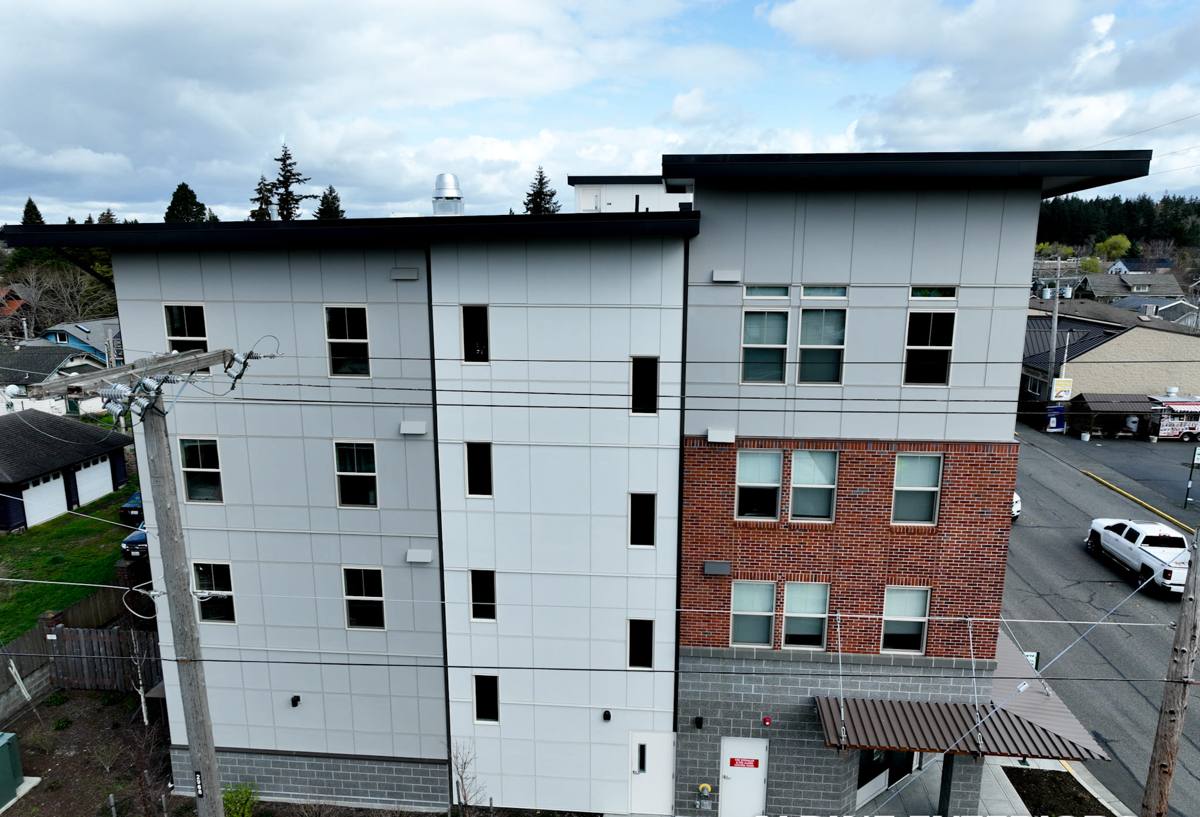
 Ferndale Exterior
 Siding Repair for Sumas Homes: What This Climate Does to a Wall System
Sumas sits close enough to the water and the Nooksack lowlands that homes here take on a specific mix of punishment: salt-tinged air moving in off the Strait, long stretches of driving rain in fall and winter, and a moss season that can run six months or more on shaded, north-facing walls. Siding repair in this part of Whatcom County is rarely about one bad board. It's usually about a wall system that's been absorbing moisture, cycling wet-to-dry, and hosting organic growth for years before a homeowner notices a soft spot or a stain.
We do siding repair work for homes in Sumas and throughout the Ferndale area, and the pattern is consistent: the visible damage is a symptom, not the whole problem. A proper repair starts by figuring out how water got in, not just patching where it came out.
Why Repairs Fail When They Only Address the Symptom
A lot of siding repair calls we get are actually second repairs — someone patched a section a few years back, and the same spot is failing again. That happens when the repair replaces the damaged material but doesn't correct the underlying cause: a failed caulk joint, a flashing detail that was never installed correctly, a trim board holding water against the wall, or ongoing moss and algae growth that's kept a section of wall damp longer than it should ever be.
Common Root Causes We Find Locally
- Missing or deteriorated kick-out flashing where a roofline meets a wall, letting roof runoff wash directly down the siding
- Caulk joints at trim and window edges that have shrunk, cracked, or pulled away after repeated wet-dry cycles
- Moss and algae mats on shaded walls holding moisture against the siding surface far longer than sun-exposed sections
- Original installation gaps — siding installed too close to grade, decks, or roof lines with no clearance for water to shed
- Fasteners that have backed out or corroded, leaving small gaps that wick water behind the cladding
If a repair doesn't correct the cause above, the new material fails on the same timeline as the old material did.
What a Correct Siding Repair Actually Involves
A repair done right has a few non-negotiable steps, regardless of what siding material is on the wall today:
- Diagnose before opening anything up. We look at the damage pattern, check adjacent flashing and trim, and identify whether this is an isolated failure or a sign of a wider moisture problem.
- Open up enough to see the sheathing and house wrap. Damaged siding often hides damaged sheathing behind it. If the wall assembly underneath is compromised, replacing only the visible siding is a temporary fix at best.
- Correct the water path, not just the surface. That means fixing flashing, re-establishing proper clearances, and sealing details the way they should have been sealed originally.
- Match or upgrade the replacement material. Where we're patching an existing non-Hardie product, we're honest about the limits of that patch. Where a homeowner wants a permanent fix, we talk about transitioning that section — or the whole elevation — to James Hardie fiber cement.
Why We Only Install James Hardie Fiber Cement
We install James Hardie siding exclusively — we don't install vinyl, LP SmartSide, Cemplank, Allura, or primed wood siding on new work. When we're asked to repair one of those materials on an existing Sumas or Ferndale home, we'll do the repair honestly and correctly, but we'll also tell you what we see: those products behave differently in this climate, and repairs on them come with real limits.
What Makes Hardie Different for Repair-Prone Areas
Fiber cement doesn't absorb water the way wood-based products do, and it doesn't degrade under UV and moisture cycling the way vinyl can over decades. It's non-combustible, holds paint and factory finish far longer than primed wood, and James Hardie's HZ product lines are engineered specifically for climate zones like ours — places with sustained damp weather rather than dry heat. When we repair a Hardie wall, we're usually dealing with an isolated impact or an installation detail issue, not systemic material failure. That's a meaningfully easier and more permanent repair.
We're not saying every other product is unusable — vinyl and engineered wood sidings have legitimate uses and reasonable installed cost. But for a Whatcom County home exposed to salt air, standing moss season, and heavy driving rain, we've seen enough repeat repair calls on those materials that we no longer install them, and we tell homeowners why when the topic comes up.
Repair vs. Partial Replacement vs. Full Re-Side: How to Decide
| Situation | Typical Approach | What to Watch For |
|---|---|---|
| Single damaged board or small isolated section, sound wall underneath | Spot repair with matched or Hardie replacement piece | Confirm flashing and caulk at the repair are corrected, not just cosmetic |
| Damage concentrated on one elevation (often north or shaded side) | Section or elevation replacement | Shaded, moss-prone walls often justify redoing the whole face rather than patching repeatedly |
| Damage found in multiple spots across the home, or sheathing rot discovered | Full re-side evaluation | Repeated failures across a home usually mean the original material or installation is the issue, not the weather alone |
| Cosmetic fading or moss staining, no soft spots or gaps | Cleaning and maintenance, not repair | Don't let a contractor sell a repair you don't need — moss staining alone isn't structural damage |
The Role of Moss and Algae in Siding Failure Here
Moss season in this part of Whatcom County isn't cosmetic once it takes hold on siding. Moss and algae mats hold moisture directly against the wall surface, block airflow that would normally let siding dry out between rains, and create an acidic, damp micro-environment that accelerates wear on caulk joints, paint film, and the siding material itself. Homes with mature trees, north-facing walls, or limited sun exposure — common in and around Sumas — see this more than open, sun-exposed lots.
Part of any honest siding repair assessment includes looking at why moss is growing where it's growing, and whether trimming back vegetation, improving drainage, or addressing a shade problem is part of the real fix — not just the siding repair itself.
Our Process for a Siding Repair Call
- On-site inspection of the damaged area and adjacent sections, including a look at flashing, trim, and grade clearance
- Where damage suggests it, opening the wall enough to check sheathing and house wrap condition
- A straight explanation of what's causing the damage — not just what we found
- A written scope covering the repair itself, corrected details, and material options, including Hardie where a permanent fix is the goal
- Repair work matched to the existing wall where feasible, or a clear recommendation when a patch isn't the responsible answer
We work in Sumas and around Ferndale regularly enough to know which details tend to fail first on homes in this area — flashing above roof-to-wall transitions and moss buildup on shaded elevations show up again and again. That local pattern recognition is part of what a homeowner is paying for when they hire a crew that already works this ground, rather than a contractor unfamiliar with how Whatcom County weather actually behaves on a wall over ten or twenty years.
What to Ask Before Hiring for a Repair
Siding repair is an easy trade to do poorly and hard for a homeowner to verify after the fact, since the failure point often gets covered back up. A few questions are worth asking any contractor before you hire:
- Will you show me what's behind the damaged siding before you close it back up?
- What caused this failure, in your assessment — not just "old siding"?
- Are you correcting the flashing or water path, or only replacing the visible material?
- What happens if you find sheathing damage once you open the wall?
- Can you show me the written scope before work starts?
If a repair estimate skips straight to a price without an explanation of cause, that's worth pausing on.
Get an Honest Look at Your Siding
If you're seeing soft spots, staining, moss buildup, or repeat damage on your Sumas or Ferndale home, we're glad to take a look and give you a straight read on what's going on and what it'll take to fix it right — no pressure, no upsell. Use the form below to request a free estimate.