 Ferndale Exterior
 Why Birch Bay's Coastal Climate Is Hard on Windows
Birch Bay sits close enough to open water that homes here take a different kind of weather beating than most inland properties elsewhere in Whatcom County. Salt-laden air moves through window hardware and frame joints, speeding up corrosion on metal parts and breaking down sealants faster than a typical inland install. Add in driving, wind-pushed rain that hits windows at an angle instead of just falling straight down, and you've got water testing every seam, flashing detail, and sill joint on the house.
Then there's the long moss season. Whatcom County's wet stretch keeps north-facing and shaded walls damp for weeks at a time, and window sills, trim, and the wood behind them are often the first place that shows it — dark staining, soft spots, and moss creeping into corners that never fully dry out. None of these three factors is unique to Birch Bay on its own, but the combination of salt exposure, wind-driven rain, and extended dampness is what separates a coastal window job from a standard replacement.
The Housing Stock We Typically See in Birch Bay
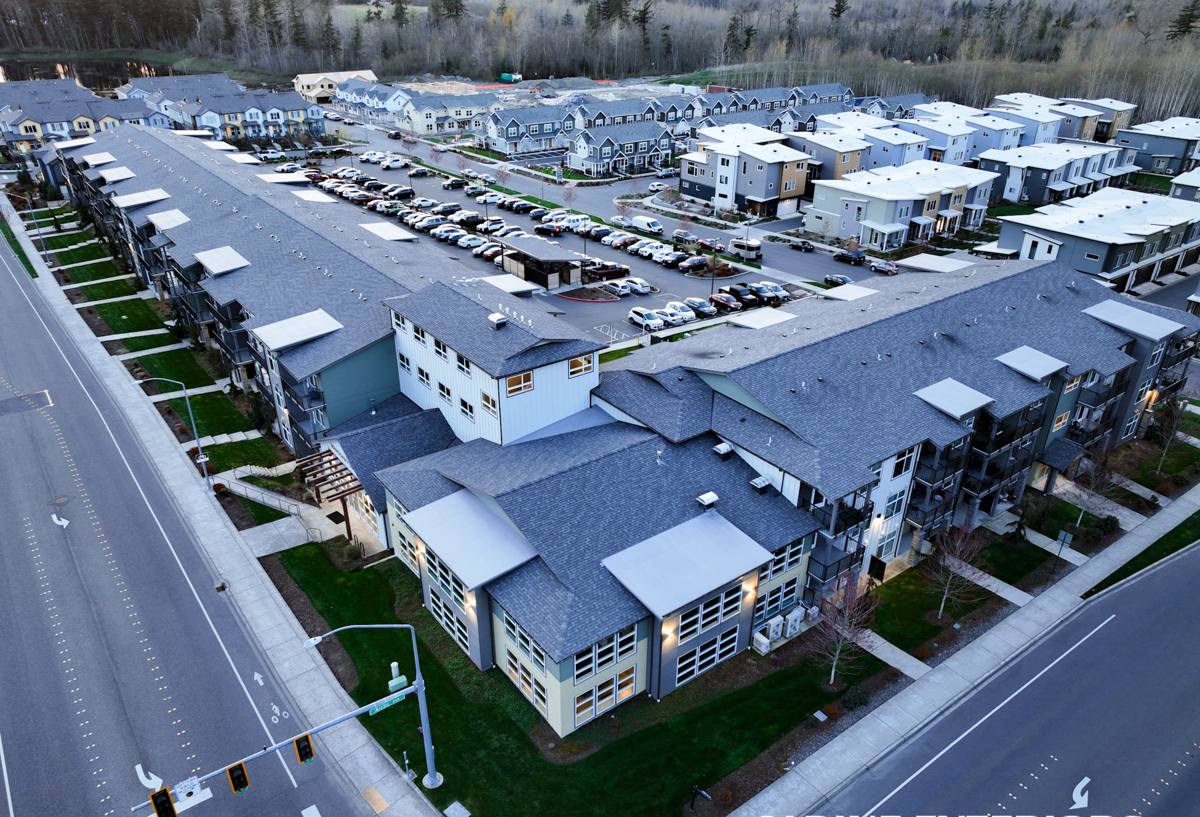
A lot of the housing here started as smaller cabins and beach cottages, many later converted into year-round residences without every original building detail being upgraded along the way. It's common to find original aluminum sliders or single-pane windows still in place from the home's early construction, doing the job of keeping weather out but offering little in the way of insulation or a tight seal anymore.
Alongside those older cabins are newer builds and remodeled homes, some closer to the water and more exposed to wind than a typical sheltered lot further inland. Wind exposure matters more here than homeowners often expect — a window that performs fine on a protected inland lot can underperform on a more open Birch Bay site simply because it's taking on more direct wind-driven rain and pressure.
Signs Your Windows Are Ready for Replacement
Coastal wear doesn't always announce itself with an obvious leak. Often it shows up as small, easy-to-dismiss annoyances that add up. Watch for:
- A draft you can feel near the frame even with the window fully closed and latched
- Fogging or a hazy film between panes of double-pane glass — a sign the seal has failed
- Windows that stick, won't stay open, or take real effort to latch
- Chalky, pitted, or corroded-looking aluminum frames or hardware
- Soft, discolored, or spongy wood at the sill or jamb when pressed
- Moss, algae, or dark staining building up on exterior sills and trim that won't scrub off for long
- Noticeably higher heating bills without a clear other cause
- Rattling or whistling around the frame during windy weather off the water
Any one of these on its own might just mean a repair. Several together, especially on a wall that takes the brunt of the weather, usually means the window has reached the end of its useful life.
What a Correct Window Replacement Actually Involves
Swapping the visible window is the easy part. What determines whether the new window lasts happens in the details around it, and this is where coastal jobs need more care than an average inland install.
Checking What's Behind the Old Window
Before a new unit goes in, the opening needs to be inspected for hidden rot or water staining in the sheathing and framing. Given how much moisture Birch Bay walls can hold onto during the wet season, it's not unusual to find some degree of damage behind an old window that looked fine from the outside. Catching that now, rather than sealing it back up, is the difference between a repair that lasts and one that fails again in a few years.
Flashing and Drainage
A sill pan flashing sloped to carry water back outside — not just a bead of caulk — is what actually keeps wind-driven rain from working its way into the wall over time. The new window also needs to integrate correctly with the home's weather-resistive barrier, with each layer lapped so water sheds down and out rather than getting trapped behind the siding.
Sealants and Fasteners
In a salt-air environment, the sealant and fastener choices matter more than they would inland. We use sealants rated for the exposure and fasteners resistant to corrosion, since standard hardware can start showing rust streaks and weakening well before a window's expected lifespan is up.
Finish Work
Interior and exterior trim gets reset cleanly, gaps around the frame get properly insulated (not just stuffed with excess foam, which can bow a frame), and everything gets a final weather seal before we call the job done.
Choosing Frame and Glass for Salt Air and Driving Rain
There's no single "best" window for every home — it depends on the wall's exposure, your budget, and how much upkeep you want to take on. Here's how the common frame materials generally hold up in a coastal environment like Birch Bay:
| Frame Material | How It Handles Salt Air & Coastal Moisture | Ongoing Maintenance |
|---|---|---|
| Vinyl | Won't corrode or rust; performs consistently in salt air | Low — periodic cleaning |
| Fiberglass | Very dimensionally stable, resists pitting and expansion/contraction stress | Low |
| Aluminum | Can pit or corrode over time in salt-heavy air unless it has a marine-grade finish | Moderate to higher |
| Wood / wood-clad | Classic appearance, but the wood needs consistent exterior maintenance to hold up against Whatcom County's rain and moss season | Higher |
On the glass side, a dual-pane unit with a low-E coating and an argon gas fill is our standard recommendation for this area. The low-E coating helps manage heat loss and reduces condensation risk on the interior pane — useful when a home sits in a damp, cooler microclimate near the water. Argon gas and a warm-edge spacer add a bit more insulating value and help keep the edge of the glass from becoming a cold spot where moisture likes to collect. On more wind-exposed walls, we'll also talk through impact-resistant or heavier glass options if wind-driven debris or storm exposure is a real concern for your specific lot.
What Drives the Cost
Window replacement pricing varies a lot from house to house, and we'd rather explain what moves the number than throw out a figure that doesn't match your project. In general, a single standard-size window replacement can run anywhere from a few hundred dollars on the low end to well over a thousand for larger openings or higher-performance glass packages — the factors below are what push a project toward one end of that range or the other.
| Factor | Why It Affects Price |
|---|---|
| Number and size of windows | Larger openings and whole-house jobs involve more material and labor per project |
| Frame material | Vinyl is typically the most budget-friendly; fiberglass and wood-clad cost more upfront |
| Glass package | Low-E coatings, argon fill, and impact-resistant glass add cost but also performance |
| Full-frame vs. insert replacement | Full-frame replacement (removing down to the rough opening) costs more than an insert into an existing, sound frame |
| Hidden framing repair | Rot or water damage found behind an old window adds repair work before the new unit can go in |
| Accessibility | Second-story windows or tight coastal lots can add time and equipment needs |
Our Process, Start to Finish
- On-site assessment — we measure every opening, check the condition of the surrounding framing, and talk through which walls take the most wind and rain.
- Product selection — we walk you through frame and glass options suited to that specific wall's exposure, not a one-size-fits-all recommendation.
- Precise ordering — windows are ordered to the exact measurements of each opening.
- Careful removal — old windows come out cleanly, and we inspect the sheathing and framing underneath before anything new goes in.
- Installation — sill pan flashing, correct weather barrier integration, insulation, and sealing, done in the right order.
- Final check and cleanup — we test operation, walk the job with you, and clean up the site before we leave.
Why a Crew That Already Works Birch Bay Matters
A window contractor who mostly works sheltered, inland neighborhoods will still do competent work — but they may not have a feel for which details matter most on a wind-exposed, salt-air lot like the ones common in Birch Bay. We've seen what tends to fail first out here: which corners of a house hold moisture longest through moss season, which frame materials hold up and which need more attention, and how much of a difference proper flashing makes on a wall that takes rain sideways instead of straight down.
That local familiarity also extends to the practical side — knowing Whatcom County's permitting requirements, understanding realistic timelines around the wetter months, and being reachable afterward if a question comes up rather than being a name you found once and never hear from again.
If your windows are drafty, fogged, sticking, or just showing their age, we're happy to come take a look and give you a straight assessment — no pressure, no upsell. Use the form below to request a free estimate and we'll walk your home's specific exposure with you before recommending anything.